
Responding to the DEFRA wood burning consultation
10th February 2026
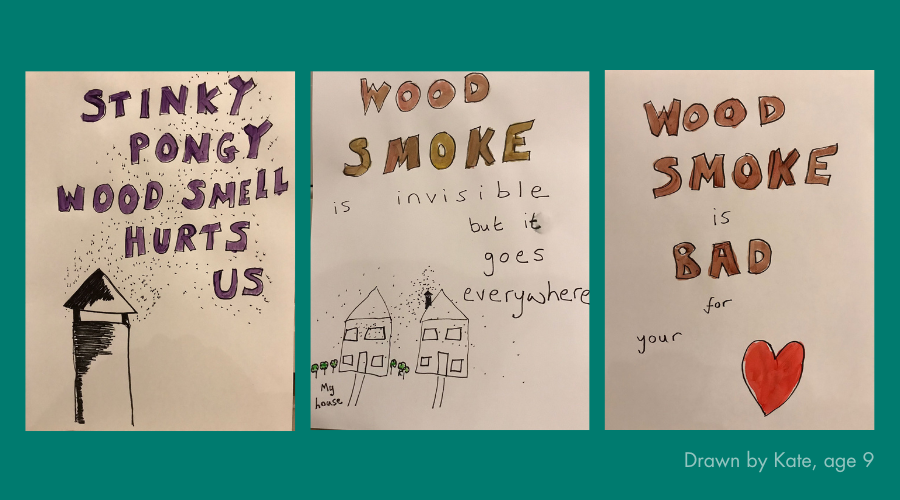
Can you smell woodsmoke on your street? Does wood burning in your area affect you or your family?
Good news - the government is consulting right now on reducing air pollution from wood burning in the UK.
This is a critical moment to get your voice heard by the government if you are concerned about the health and environmental impacts of air pollution from fires and stoves.
The consultation aims to reduce air pollution from burning in three ways, through:
Stricter emissions limits for new stoves,
Mandatory labelling for stoves and fuels,
Increased enforcement penalties for fuel suppliers.
This may sound promising, but the proposals don’t address the current levels of wood burning in UK homes or the impact on neighbours. If you’re affected, please share your personal experience in your response.
The consultation deadline is 19th March. You can find information below to help you respond. Thank you!
How to respond if you’re short on time
You can skip from Question 1 (the only required question) to Question 52 to outline why you want to see action on domestic burning. Please include your personal experience of how you and your family are impacted, or why you would like to see stronger action on this topic, and any thoughts you might have on the proposals failing to address the current levels of burning in the UK.
We also encourage you to strongly agree with the introduction of mandatory health labelling for appliances and solid fuel packaging (questions 17, 23 and 41).
Guidance for longer responses
There are 52 questions in the consultation but only question 1, about confidentiality, is required. We suggest looking through and answering whichever questions feel appropriate for you. We haven’t suggested responses for all questions; only the main points are addressed below. If you would like a more detailed guide to responding, please email Ruth at hello@mumsforlungs.org.
1. Proposed new emissions limits (questions 9, 10 and 11)
The consultation proposes a new smoke limit of 1 gram per hour for appliances (reduced from the current 5 grams per hour) and admits that 70% of stoves tested since 2018 already meet this.
Stoves emit high levels of pollution in the real world, both inside homes and through chimneys into local neighbourhoods. Emission levels can vary due to fuel type, room size, user behaviour, burning duration and varying chimney maintenance. We need emissions limits to be as strict as possible, to allow for varying levels in practice.
This proposal is not strict enough to make a meaningful difference to the air we breathe. It will do nothing to protect the health of those currently affected by household burning.
2. Timeframe (questions 12 and 13)
New standards would not come into force until 3-5 years from the date new legislation is made. The consultation documentation acknowledges that “abatement is assumed to only occur after the 3-year implementation period is over.” In this scenario, we will not see any emissions reductions even from new stoves until 2030.
A maximum 2-year timeframe from the date of the consultation would be more appropriate.
3. Labelling of stoves and fuels, and penalties for enforcement (questions 17 - 51)
Please strongly agree with the introduction of mandatory health labelling for appliances and solid fuel packaging (questions 17, 23 and 41), and give your personal view on the labels. You could also include that as woodsmoke has a similar makeup and toxicity to cigarette smoke, it would be more appropriate to label stoves similarly to cigarette packets.
The labelling for both stoves and fuels will be developed with industry; yet the stove industry has a commercial interest in promoting stoves. Health professionals and social scientists should have input for this to be a successful measure.
The terms ‘DEFRA approved’ and ‘DEFRA exempt’ on stoves are misleading; we suggest highlighting that DEFRA should remove this labelling system.
The level of penalties for breaches of the proposed labelling requirements is very low. It needs to be minimum £2000 for a business to adhere.
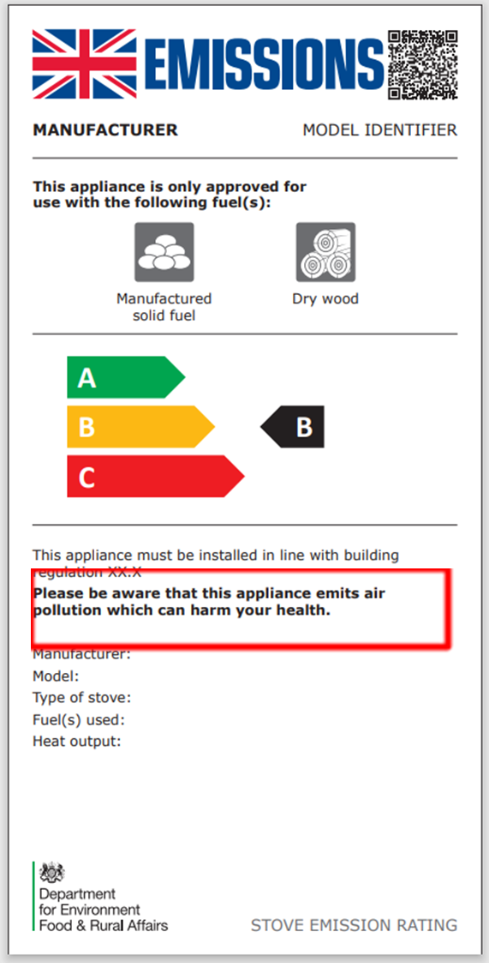
DEFRA’s suggested label for stoves
4. Additional evidence (52)
This is where you can outline in detail why you want to see action on domestic burning. Please include your personal experience of how you are currently impacted, along with anything else you would like to say.
To recap
The consultation will not lead to meaningful reductions in air pollution from domestic burning because:
All those currently affected by households burning near them can expect no respite.
The effect of burning on neighbourhoods in the UK is not acknowledged.
The new emissions limits suggested for stoves are largely already met.
The timeline is too long, with only minimal reductions after 3-5 years.
Health professionals and social scientists should have input on proposed labelling.
The proposed penalties are not high enough.
It does not propose a ban on non-essential wood burning.
The strongest submissions are those that are written in your own words, outlining your personal experience of this issue!
If you have questions or would like to get involved in our wood burning campaign, please email Ruth at hello@mumsforlungs.org.