
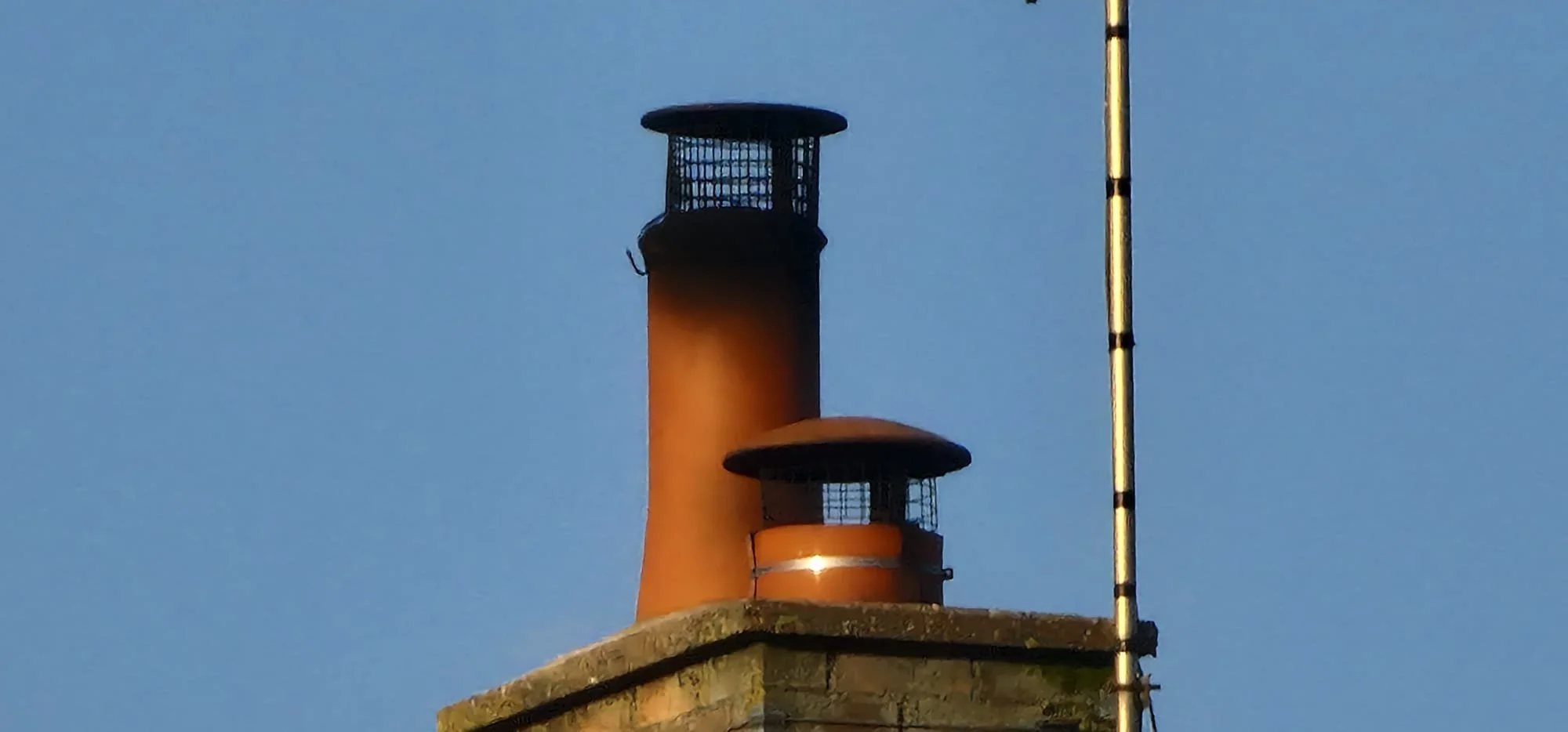
Wood Burning
The problem with wood burning
Lighting a wood stove or open fire fills our homes and streets with tiny particles of soot and carbon (PM2.5) that can lodge deep in our bodies and make us sick.
When we burn, we aren’t just heating a room, we’re creating a shared health hazard that affects our families and those living around us:
It harms your family first: The invisible, toxic particles build up in your living room. These pass deep into your lungs and enter your bloodstream, making asthma worse and increasing the risk of heart and lung conditions.
It impacts your neighbourhood: The particles drift into your neighbours’ homes and gardens, affecting the health of children and those with existing health conditions the most. PM2.5 is one of the most harmful air pollutants, and if you can smell woodsmoke, then you’re already breathing it in.
This campaign is about protecting our lungs, our families, and our communities from hidden health harms.
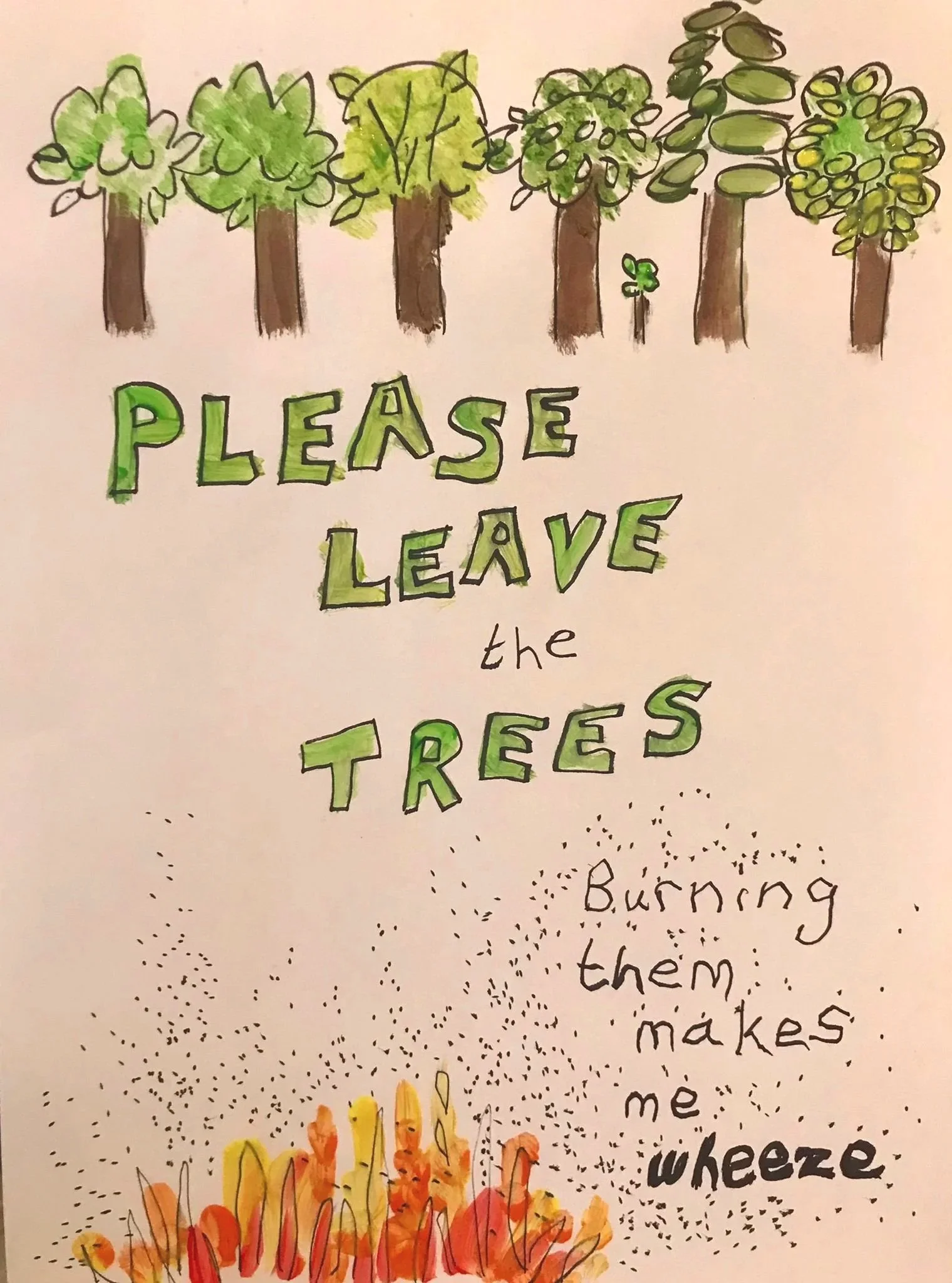
Drawn by Kate, age 9
Watch: the hidden dangers of wood burning
Our short animation, created with Dr Mathy Sannasi of Royal Holloway University, details the large amounts of invisible fine particle pollution emitted when wood is burnt, its health impacts, and what can be done about it.
Are you thinking about installing a stove? Watch this first!
Did you know?
Only 12% of UK households burn wood or other solid fuel indoors, with only 1% of households relying solely on solid fuel for their heating (from Defra’s De Minimis Assessment).
Toxic air is now linked to over 700 health conditions - and burning wood indoors is a significant source of fine particle pollution. Children are especially vulnerable because their lungs, brains, and bodies are still growing.
The Royal College of Paediatrics and Child Health advises phasing out domestic wood burning in urban areas to protect children’s health.
Our campaign asks
We’re calling on the Government to:
Launch a public health campaign to raise awareness of the dangers of wood burning stoves and open fires.
Provide effective powers to local authorities to stop unlawful burning.
Stop classifying wood burning stoves as “DEFRA-exempt” or “DEFRA-approved”.
Label wood burning stoves as harmful to better educate consumers.
Phase out non-essential burning, with support for those in rural areas and fuel poverty to transition to cleaner heating.
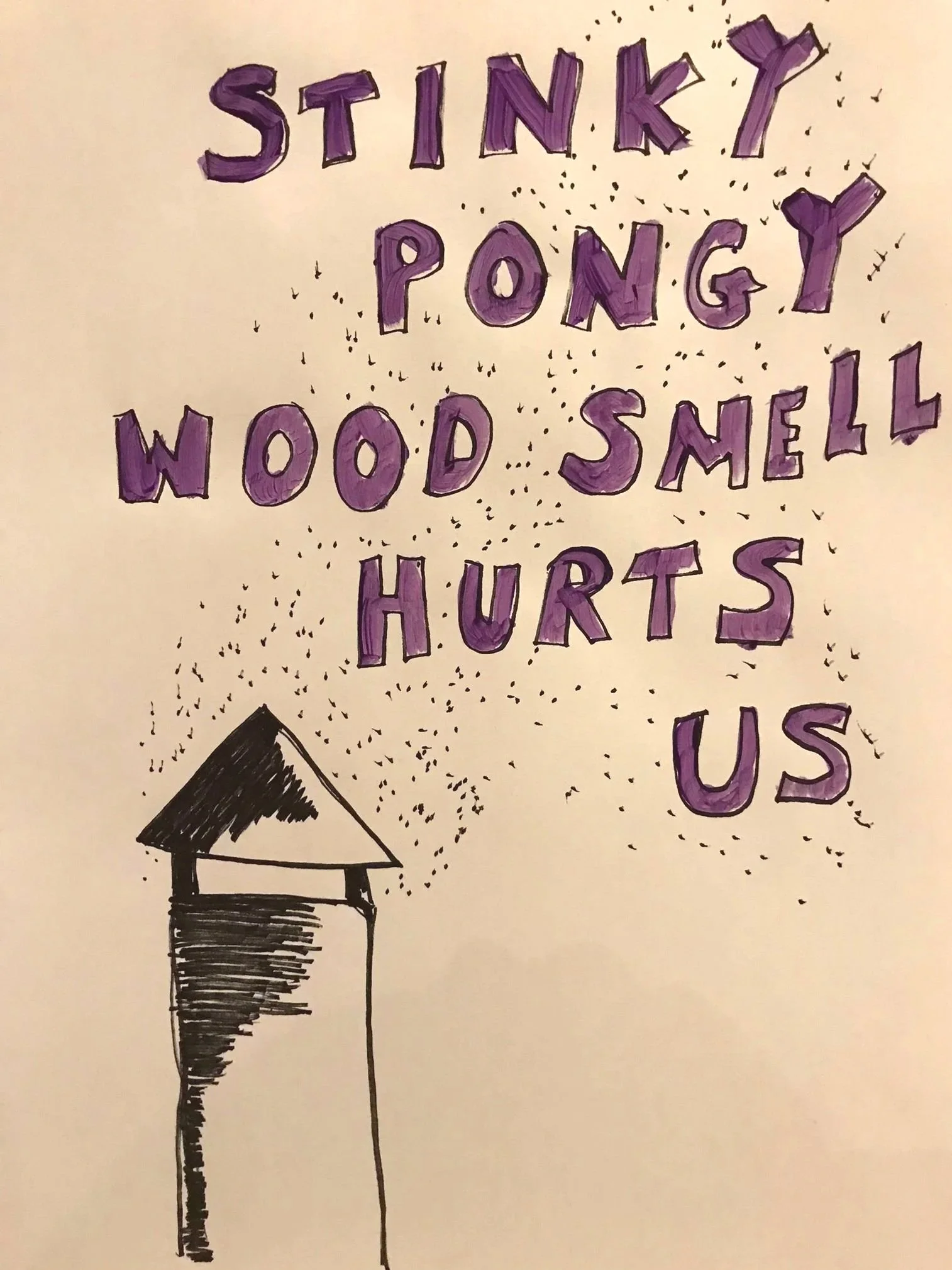
Drawn by Kate, age 9
“Wood smoke is the bane of my life in the colder months of the year, it triggers exacerbations of my lung disease, leaving me with a wheeze and a tight chest.”
Want to get involved?
Our wood burning group is made up of people from all over the UK (and beyond!) whose lives and health are affected by wood burning. The impacts of burning are real, and our group provides a supportive space where we bring together people to share ideas, research, news and sympathy about the reality of living your life breathing dirty air.
“Thanks for all that you - and everyone else in this amazing group - are doing. It really does help keep me sane knowing that others understand and are pushing for change.” — Volunteer in our wood burning group.
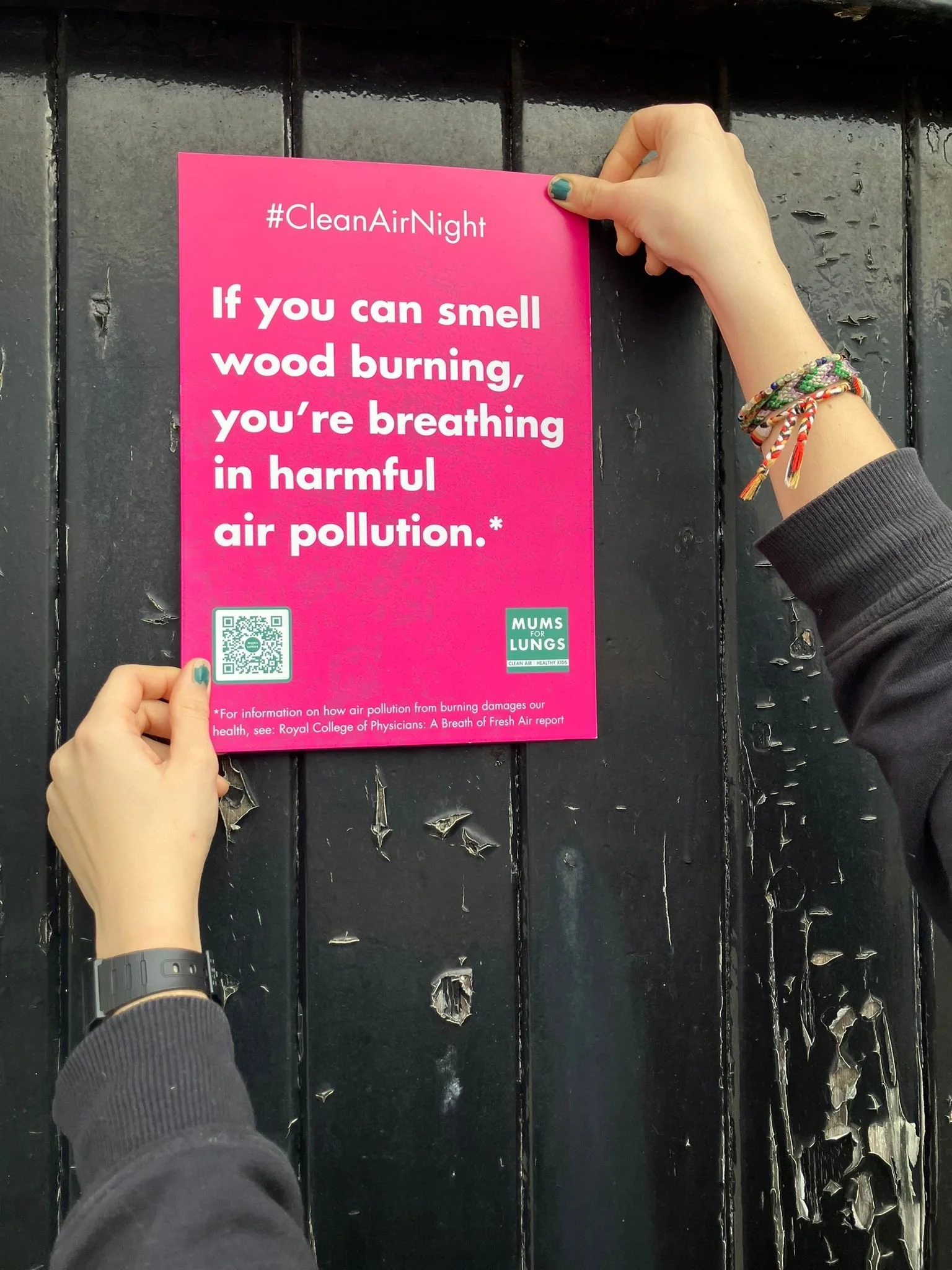
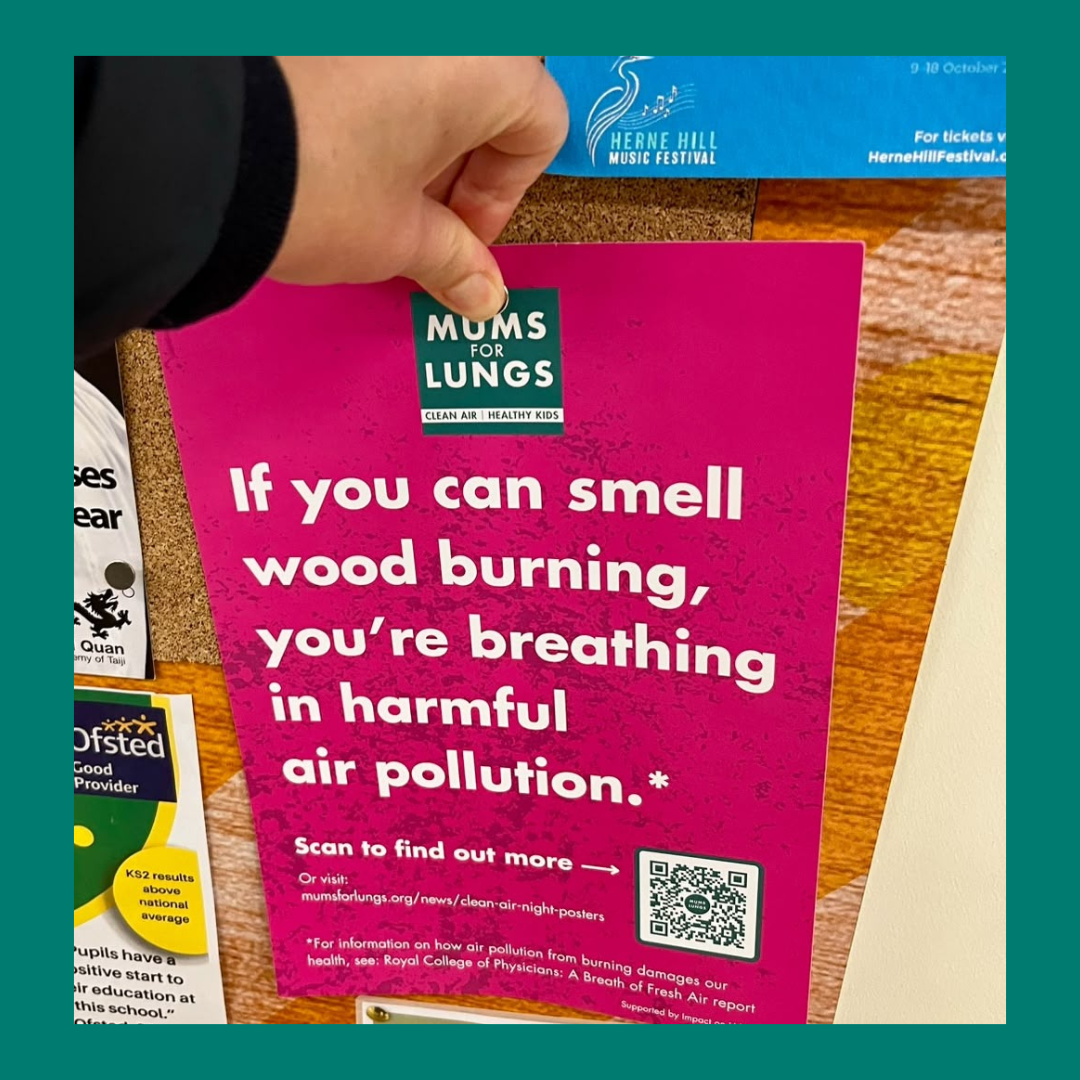
Volunteers all over the country put up posters for Clean Air Night, January 2026.
The evidence: what’s so bad about wood burning?
Do wood burning stoves cause cancer?
A growing body of medical evidence directly links wood smoke to an increased risk of cancer. Today, between 10 per cent and 20 per cent of lung cancer cases occur in people who have never smoked, and a landmark UCL study recently proved for the first time exactly how air pollution triggers cancer in these non-smokers.
Wood smoke contains known carcinogens that enter your bloodstream and damage cells. Research shows a clear connection:
Higher lung cancer risk: A major long-term study found that higher wood stove or fireplace use was associated with a 70% higher incidence of lung cancer.
Faster lung decline: Lung function has been found to decline faster over eight years among solid fuel users in England compared to non-users.
Beyond lung health: Using an indoor wood burning stove or fireplace at least once a week has been associated with a higher risk of breast cancer.
“Within weeks of my neighbour installing their wood burning stove, my lungs were affected so badly that my GP had to refer me to a respiratory specialist.” — Paula, Warrington South
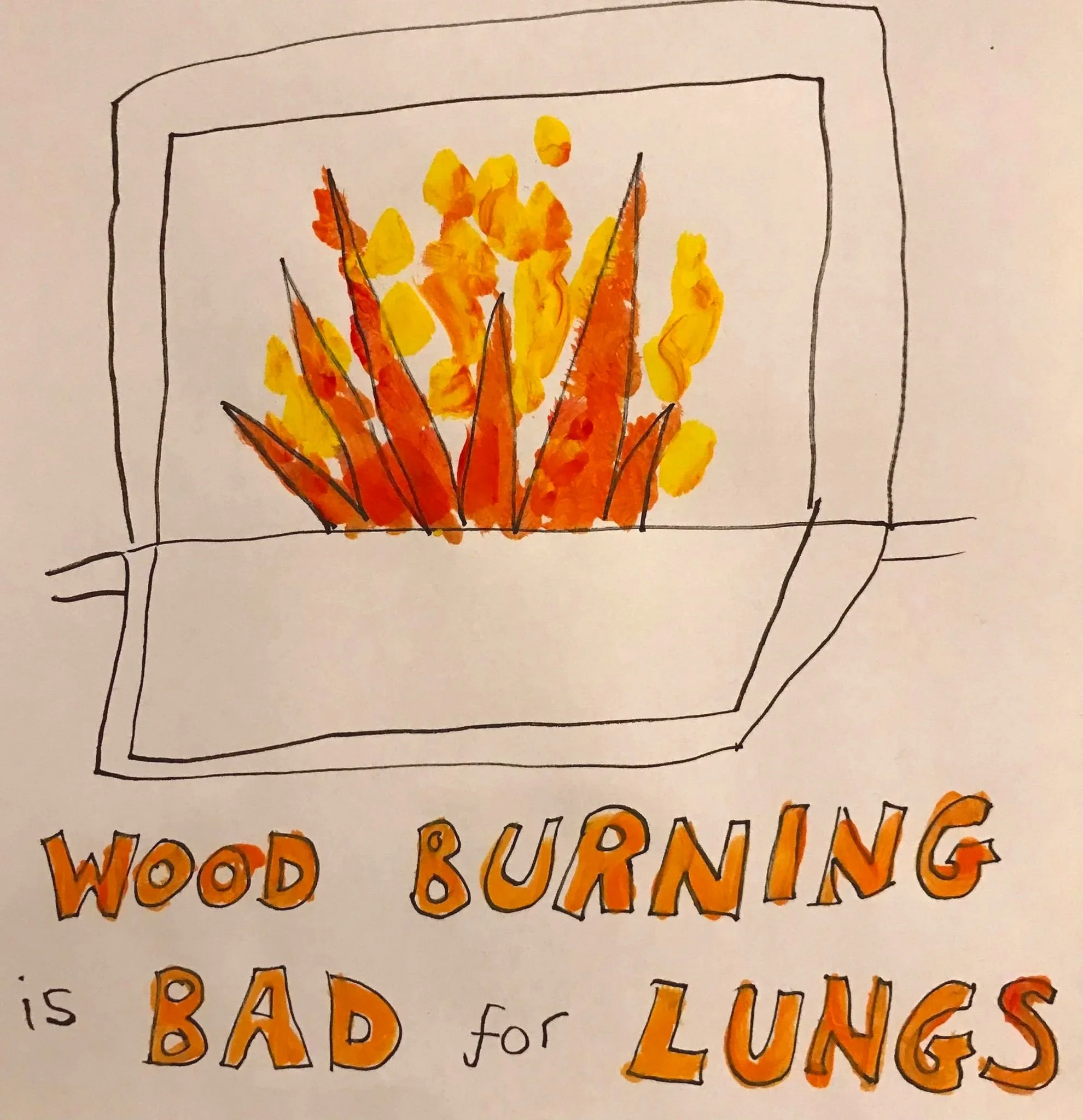
Drawn by Kate, age 9
The effect of wood burning on a neighbourhood
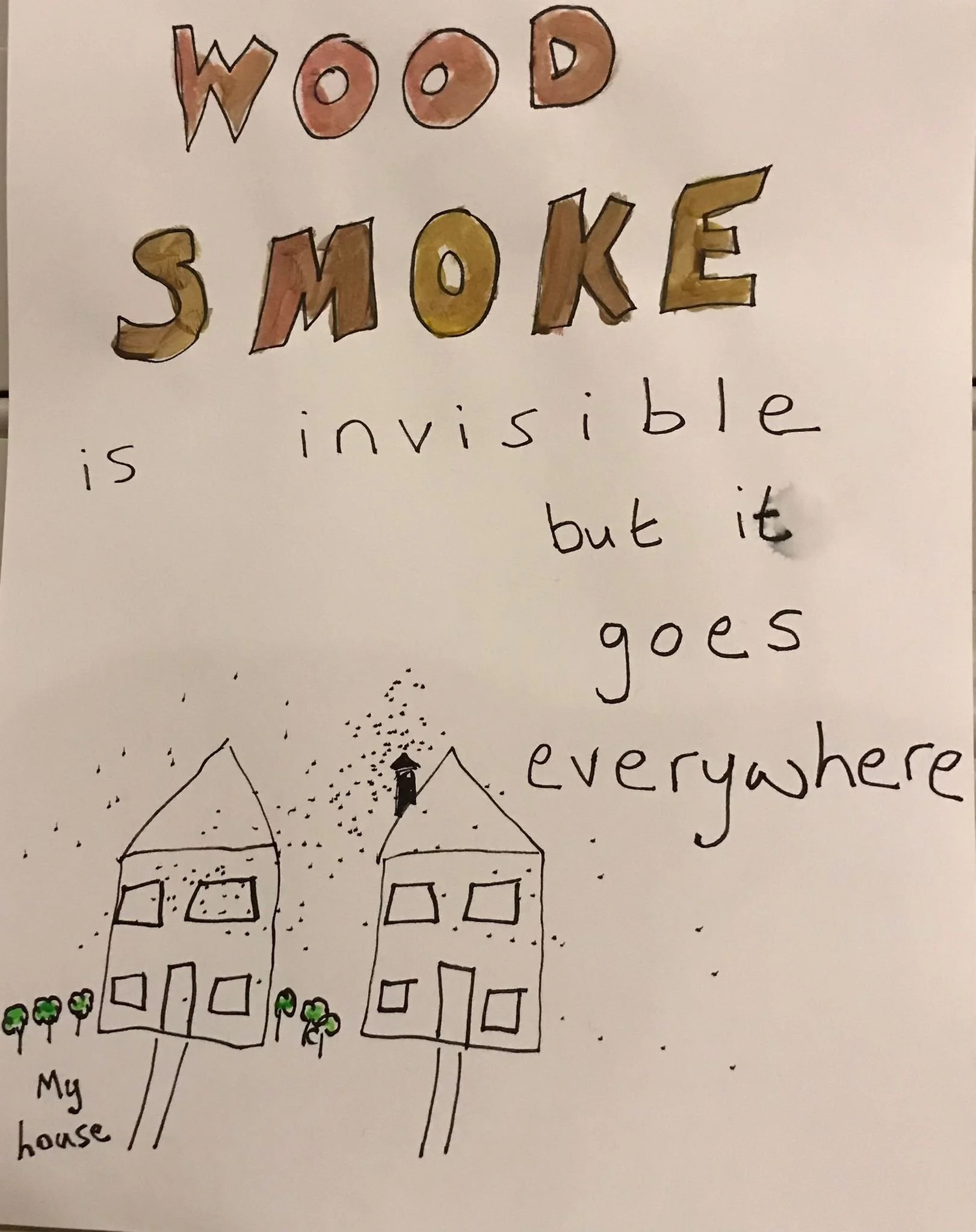
Drawn by Kate, age 9
While a small number of households rely on wood as their only source of heat, in many places across the UK, burning is largely an aesthetic or lifestyle choice made by wealthier households.
Yet where one household can choose to light a fire, neighbours have no say in breathing the resulting dirty air. The physical and mental health impacts can be significant, forcing families to close their windows, keep children indoors and change how they use their own homes and gardens.
This pollution hits those with the least choice hardest:
Vulnerable neighbours: Pregnant women, babies, children, older people and those with existing health conditions are particularly vulnerable.
Lower-income families: People in deprived areas already breathe higher levels of air pollution, and poorer housing or ventilation makes it much harder to keep neighbourhood pollution from burning out.
Because wood smoke does not stop at property boundaries, proper regulation and support for cleaner heating are essential. Yet councils lack the powers and resources to protect residents. Our research found that:
15,000+ complaints about domestic burning were made to local councils in England last year.
No prosecutions were pursued, and barely a handful of fines were issued - even in designated Smoke Control Areas.
“My children have learned to smell the air as they go into the garden to play... their playtime is regularly cut short by cancer-causing fumes. Our home is often shut up to try to keep the air clean.” — Dr Booth, Cheshire
If you’re affected by this too, please share your story with us.

You can order a printed version of this poster below
Similarities between wood and tobacco smoke
Over the past few decades, public health warnings have transformed how we view smoking indoors, yet burning wood fills our homes and streets with many of the same chemicals.
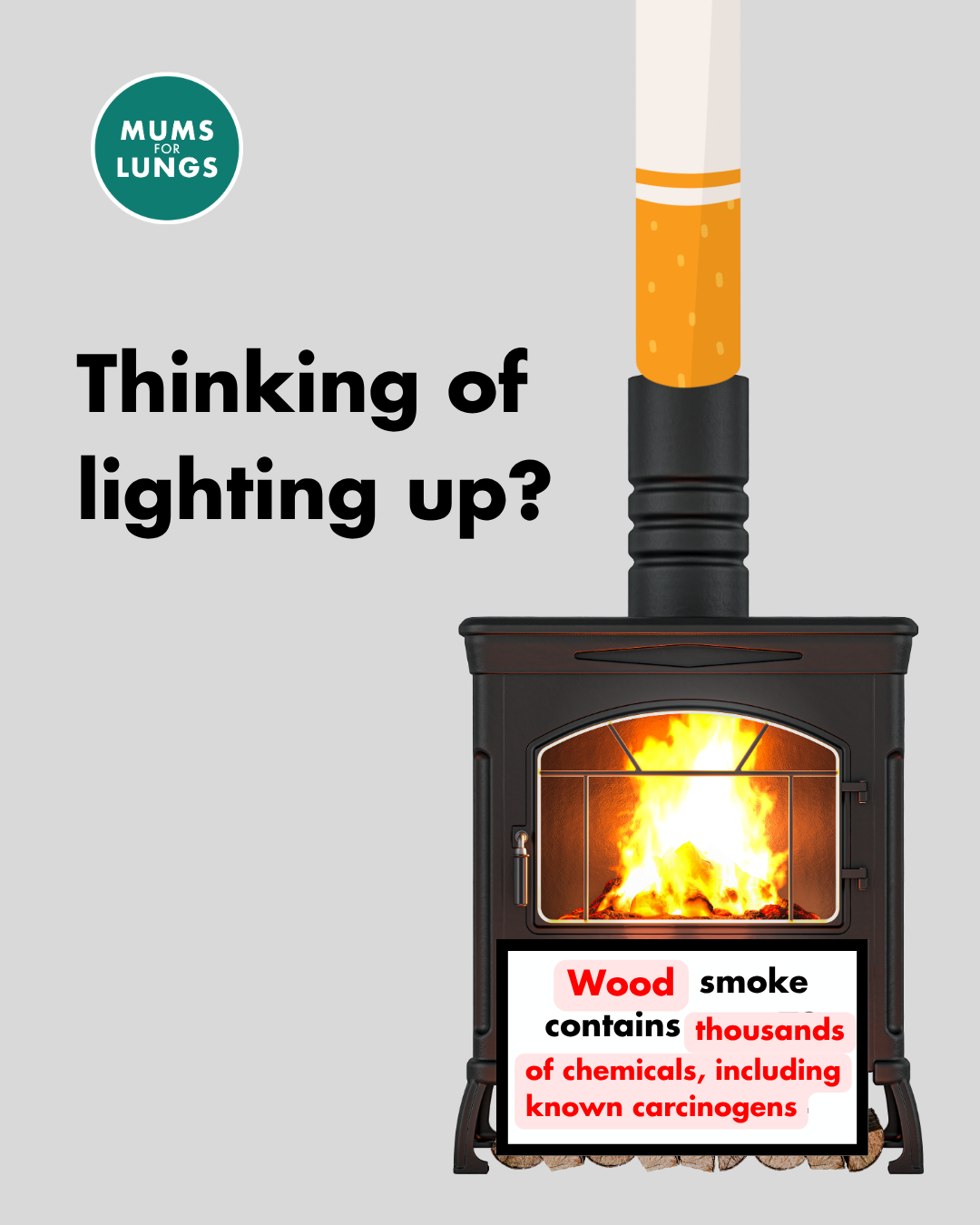
More toxic than tobacco: Wood smoke contains the same cancer-causing chemicals found in cigarette smoke, including formaldehyde, benzene and PAHs. Research shows wood smoke is actually more toxic than cigarette smoke.
Misleading labels: Tobacco packaging has carried health warnings for decades so people understand the risks. Wood stoves are sold as "Defra-approved" or "Defra-exempt," misleading families into thinking they are clean and safe to us.
“Wood burning is adversely affecting my health. I’m getting a smoker’s cough every morning when neighbours are burning wood and coal.” — Diana, South London
Wood burning and indoor air pollution
The Chief Medical Officer’s 2022 report points out that indoor air pollution is becoming a bigger share of the problem as outdoor air gets cleaner, and that adults spend over 80 per cent of a typical day indoors.
Burning solid fuel adds to this by releasing fine particles and toxic gases into your living space. Research shows that:
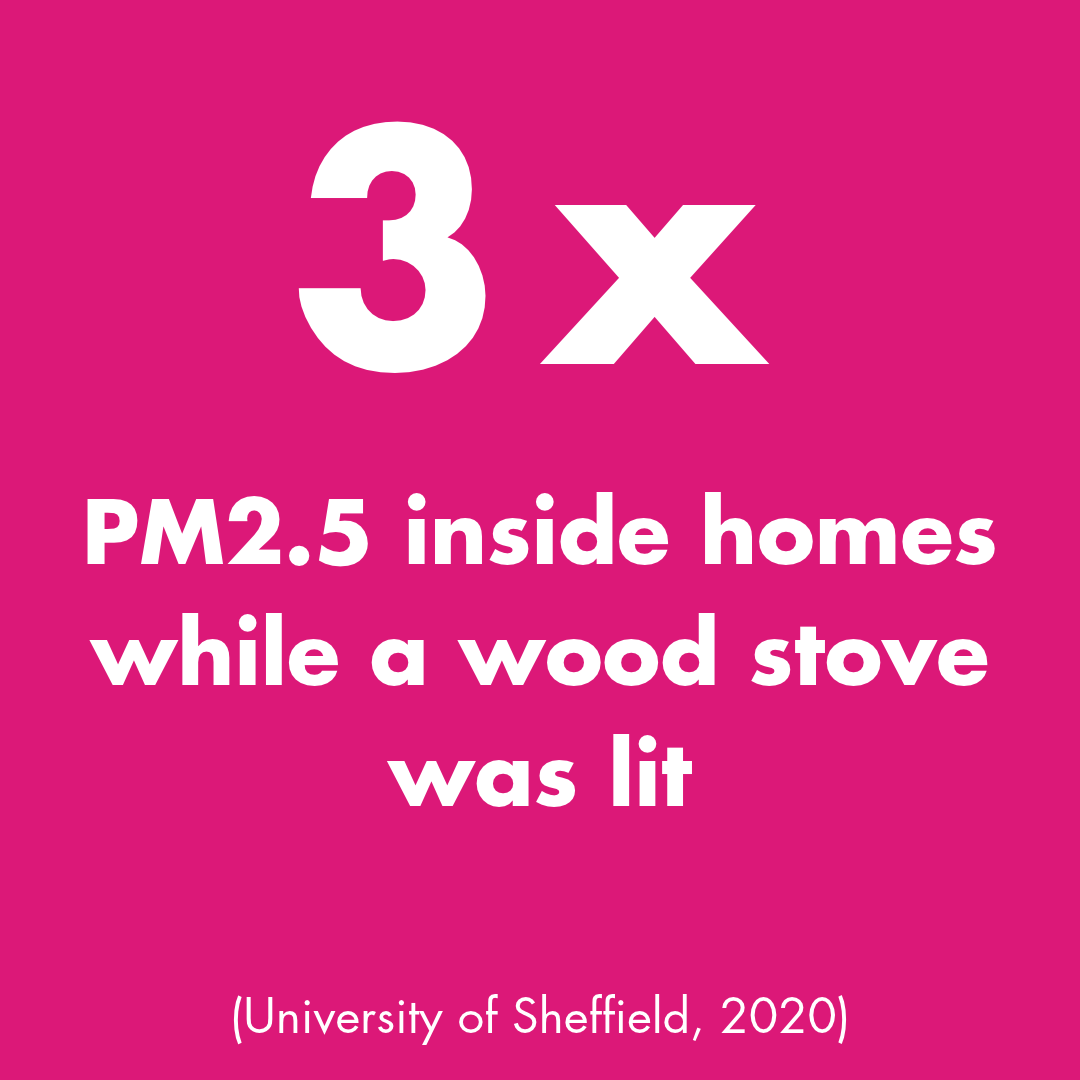
Homes are three times more polluted when a stove is lit compared to when it isn’t.
Indoor PM2.5 levels are significantly higher in homes using wood burning stoves during burning periods.
Even the newest stove models cause spikes in indoor pollution when lit, refuelled or cleared of ash.
This is exposure that’s hard to escape, and it’s particularly harmful to children, older people and anyone with a breathing condition.
Burning wood is not good for the climate
Many people assume wood is a "green" fuel because trees can be replanted, but burning wood actually releases more carbon dioxide than coal or gas for the same amount of heat.
It creates a carbon debt: A tree takes decades to absorb carbon as it grows, yet burning a log releases all of that trapped carbon back into the air in a single evening. Planting new saplings takes far too long to soak up that pollution in time to protect our children’s future.
It releases heat-trapping soot: Burning wood emits black carbon - tiny dark soot particles that absorb sunlight, trap heat in the atmosphere, and speed up global warming.
Worse than fossil fuels: Research shows that over the short timeframes we have to tackle climate change, burning wood can be even more damaging to the climate than burning coal or gas.
Burning wood is expensive
Many people light a fire hoping to cut their energy bills, yet burning wood actually costs more than using standard central heating.
Buying a new stove costs 24% more: When you factor in buying and installing a new Defra-approved stove to provide just 20% of a home's heat, the yearly cost is 24% higher than running a typical gas boiler.
Even an existing stove costs 15% more: If you already own a wood burner, buying logs and fuel still makes it 15% more expensive to run than gas central heating.
Cleaner heating saves money: In almost every scenario, heating your home with a gas boiler or a heat pump is cheaper to run, far more efficient, and much better for your family's health.

Graph taken from Global Action Plan’s Relight My Fire report on the cost of wood burning.
Newer stoves don’t solve the problem
There is no such thing as a clean wood burning stove. Even the newest stoves create pollution spikes in our homes and neighbourhoods, impacting health. Buying a newer stove does not remove the risk.
Hundreds of times worse than gas: According to the Chief Medical Officer, modern Ecodesign stoves are several hundred times more polluting than a gas boiler, and burning solid fuels is by far the most polluting way to heat a home.
“Eco” doesn’t mean safe: Multifuel Ecodesign stoves emit significantly more dangerous ultrafine particles than standard models.
Smokeless fuels still pollute: Manufactured wood briquettes and smokeless coal increase ultrafine particle exposure by 1.7 and 1.5 times compared to seasoned wood.
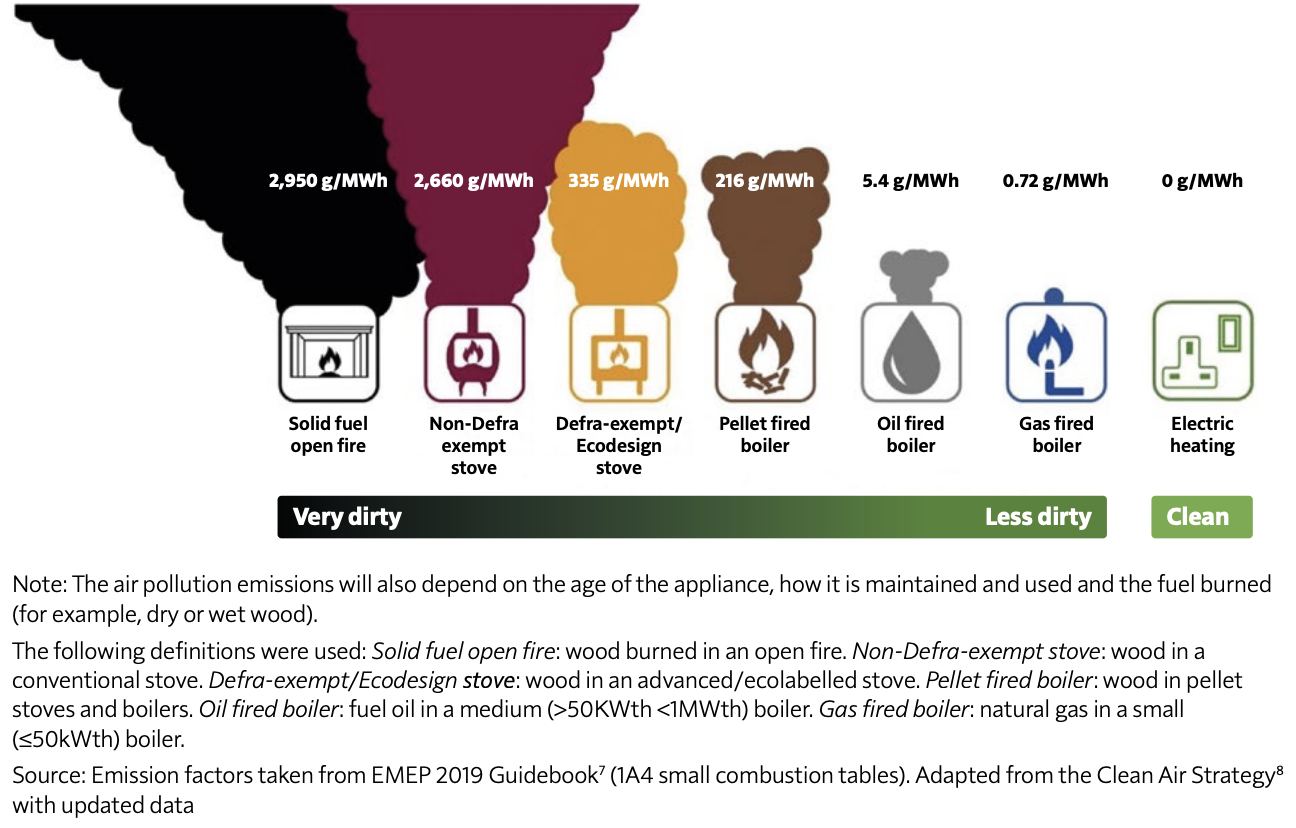
The relative PM2.5 emissions from different heating methods. Chart from the Chief Medical Officer’s 2024 Health in Cities report (Figure 4.93).
“We had a wood stove put into our flat, then stopped using it because we realised the streets of London smelt like bonfires, and it was unnecessary in a centrally heated flat. If you have another heat source I’d question the need for a stove at all.”
What you can do
In your community: spread the word
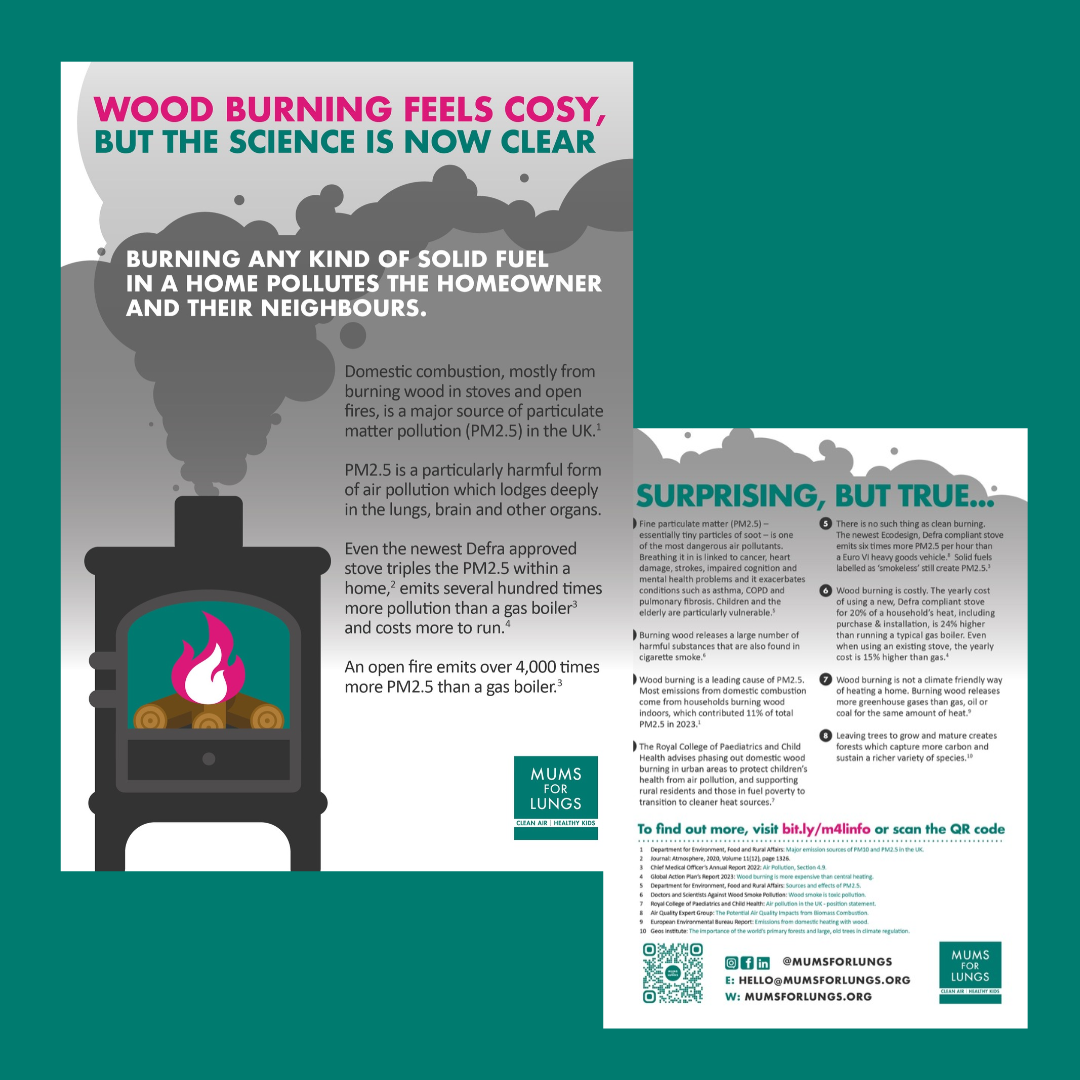
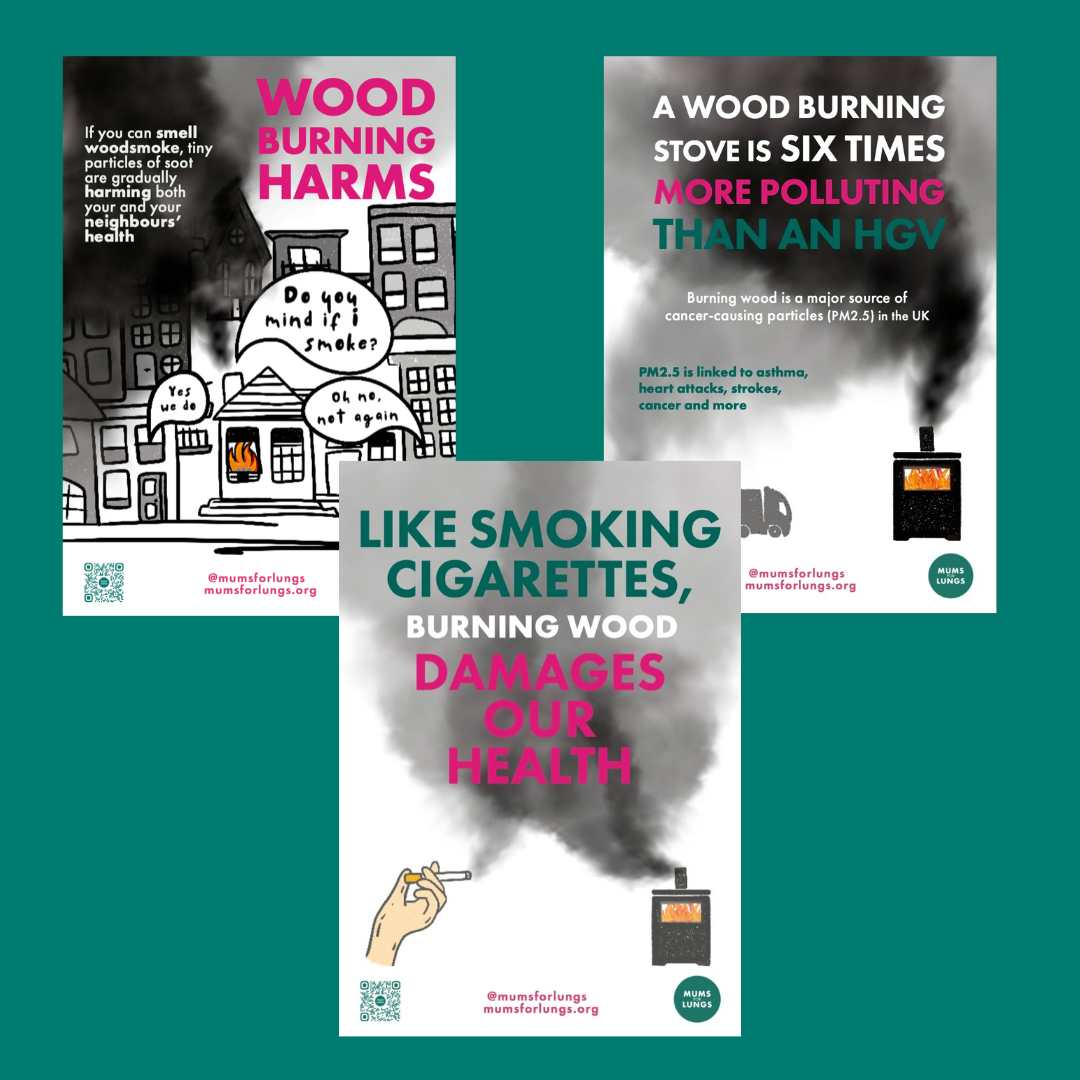
Join people across the country using our free flyers and posters to raise awareness of wood burning. We’ve sent thousands out across the UK. Put them up on a community noticeboard, in a shop or cafe or near your local playground - it’s one of the quickest things you can do to help raise awareness of the impact of wood burning.
Speak up: write to the media and your council
To the media: Magazines, TV and social media are full of roaring fires, usually without any mention of the impact on air pollution and health. If you see something you feel needs challenging, you can use our template letter to email the journalist, magazine or broadcaster.
To your council: Councils won’t know how many people care about this issue unless we tell them. You can use our template letter to write to them to ask them to raise awareness of the dangers of wood burning, and ask residents not to burn if they have another heat source.
Want to do more?
Come to one of our online meetings, or join our wood burning Google group. It’s a supportive email group that brings together people across the UK (and beyond!) to share ideas, research, news and sympathy about air pollution from wood burning.