
School Streets
What is a School Street?
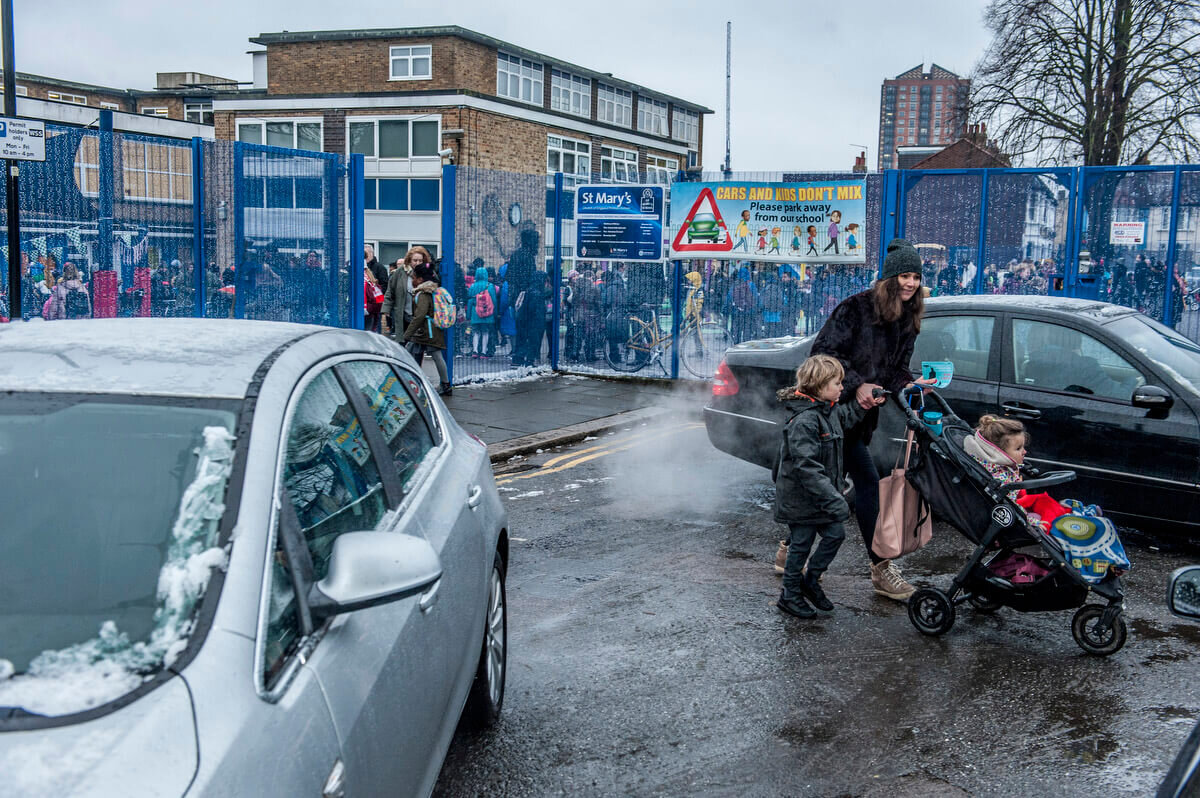
A School Street temporarily restricts motor traffic around schools at drop-off and pick-up times, allowing children to walk, cycle or scoot more safely to school. Signs are put up to inform drivers of the restriction, and barriers or cameras can be used to enforce it. Residents, local businesses, and blue badge holders can often apply for exemptions.

Image credit: School Streets project at Jessop Primary in Lambeth, Councillor Claire Holland
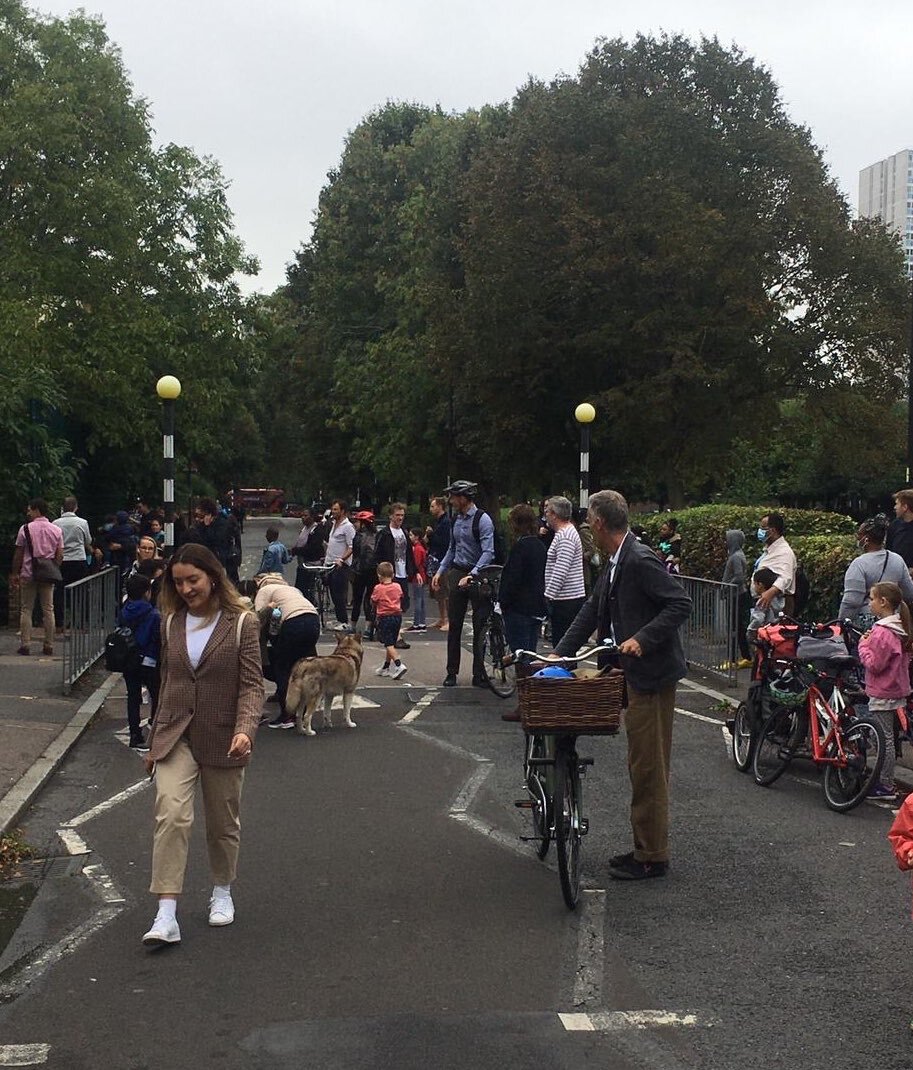
“It makes a real difference to the experience of getting to school. We don’t have to stand at the side of the road breathing in fumes and waiting while cars go past. We can stand and chat at the school gates.”
Why are School Streets good?
School Streets change our streets for the better
Those of us who pass schools during the morning rush hour know how polluted, busy and dangerous the surrounding roads can be.
40% of primary school children are driven to school in England and 25% of pupils in Inner London are driven to school every day.
Closing the roads around schools to motor traffic is a powerful way to show that roads can be reclaimed, and makes the alternatives such as cycling and walking more attractive.
Watch our film, made by James Mulholland, to see what a difference a School Street can make!
School Streets reduce air pollution and make streets safer

School Streets are proven to reduce air pollution around a school - research shows nitrogen dioxide levels reduce by up to 23 per cent where there is a School Street.
They also make it safer to walk, cycle and scoot to school, creating a more pleasant environment and giving children a chance to get some exercise. Travelling actively improves mood, behaviour and confidence, increases attention levels and enhances performance.
School Streets raise awareness of the need to reduce vehicles
Children are exposed to up to five times more air pollution on the school run than at any other time, and the links between pollution and health problems are well known.
School Streets show the local community the difference that can happen when streets are less dominated by cars, and the need to reduce traffic rates more generally. By reducing driving rates and pollution, children are given space to breathe, families space to play and communities space to connect.

“Before it was introduced, it was really stressful taking the children to school. It was total chaos. Now my kids say they feel much calmer coming to school.”
“The kids love it, they’re not scared of cycling down the road or scooting down the road. It’s completely changed the atmosphere of getting to school. ”
Watch our film about School Streets
Thanks to the teachers and parents of Jessop Primary School in Lambeth for taking part in this film, showing the benefits of School Streets.

Where are School Streets?
London
As of Summer 2026, there are over 800 School Streets in place across London, with more on the way. Nearly 30 per cent of schools in London now benefit from a School Street, and more than 50 new schemes were delivered in 2025.
Lewisham, Newham and Islington Councils are leading the charge. All have over 50 per cent of schools with a School Street. Bexley, Bromley and Hillingdon sit at the other end of the scale, with Bexley the only London borough yet to take part in this transformatory scheme.
In 2018, we began our School Streets campaign by petitioning Lambeth Council to implement School Streets. Fast forward eight years, and we were delighted when Lambeth Council announced that all of their primary schools not on main roads will have a School Street by March 2027.
London is edging closer to the Mayor’s target of 1,000 School Streets by 2030, yet progress is uneven. The success of leading boroughs shows that rapid School Street delivery is achievable when there is political will and proper enforcement in place.
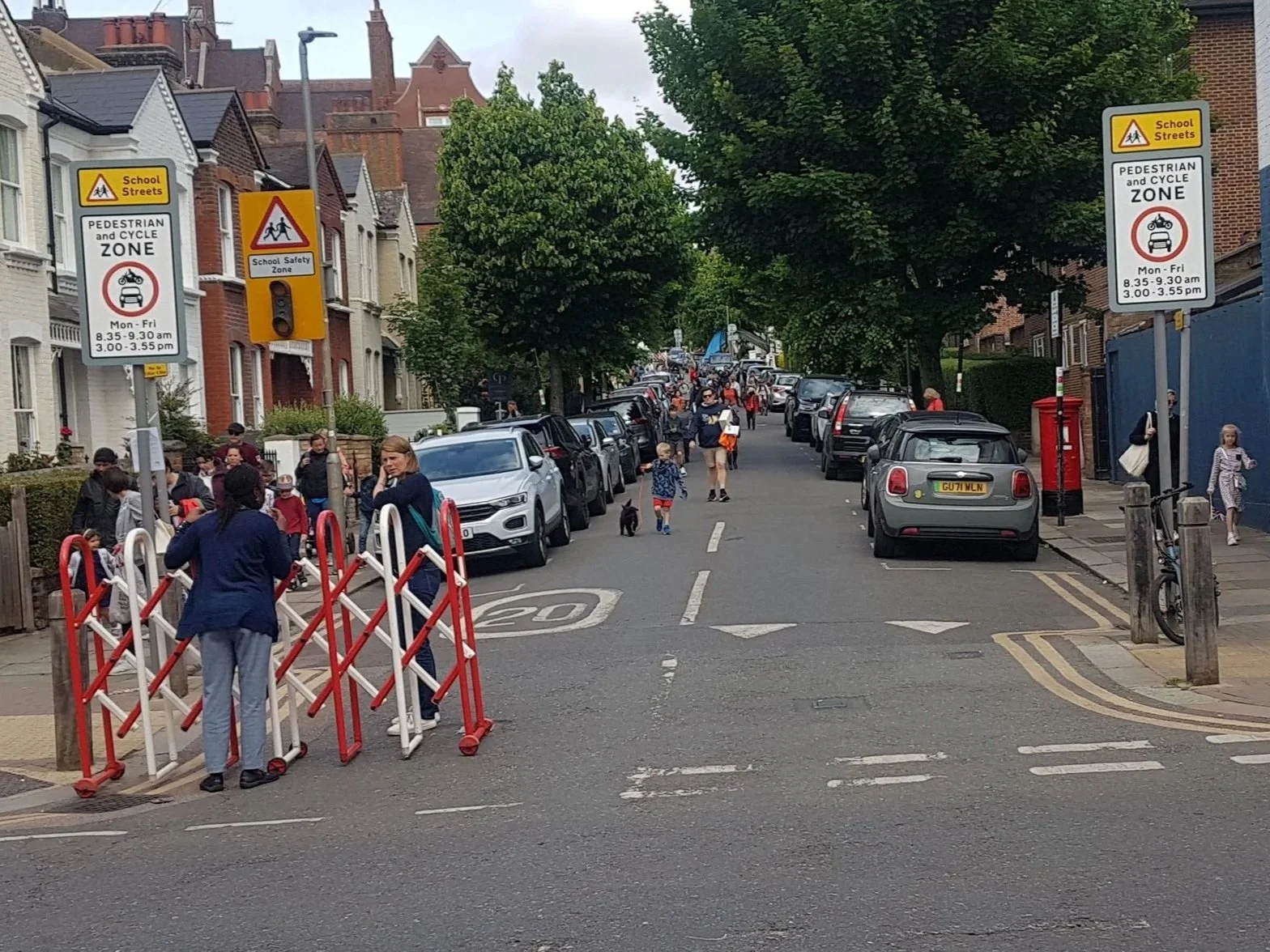
A School Street at Honeywell Primary School, Clapham
Across the country
There are far fewer School Streets outside London, we estimate around 200 across the country, but popularity for the scheme is growing.
Our School Streets report with Possible, the Active Travel Academy and Transport for Quality of Life assessed the future potential for School Streets in four cities: London, Birmingham, Leeds and Bristol. It found that:
"a comprehensive roll-out of School Streets in the four cities would reduce exposure to air pollution and road danger for 1.25 million primary and secondary students.”

A School Street at Acacias Community Primary School, Manchester
So what’s holding the scheme back outside London?
Partly it is due to funding issues and a slow uptake from local authorities for the powers to enforce School Streets with cameras. Derby Council was one of the first to apply for the powers for their School Streets. Liverpool Council has committed to setting up 50 School Streets in the coming years, and there will be 100 School Streets across Greater Manchester by 2028.

“A School Streets trial at a primary school in Eltham resulted in a 54% reduction in cars driving to school, a 27% increase in cycling and 9% increase in scooting.”
How to campaign for a School Street
-

RAISE AWARENESS
We offer support to parents and teachers in contacting local authorities to ask for new School Streets schemes.
We’ve written a briefing document for parents who would like to know more about School Streets and how to get one, and a template letter, which you can adapt accordingly, to help you present your case for the scheme to your school and council. You can find both of these in our Resources section.
-

SPREAD THE WORD
You can help to raise awareness of School Streets by chatting to other parents and discussing the issue at Parent Teacher Association meetings.
We’ve created a School Streets flyer that you can print and hand out, or ask your school to send out by email.
If you think there is support for the idea, please contact your headteacher and suggest they ask the local council to trial it.
-

BE INFORMED
We offer one-to-one calls to discuss your particular situation to see if we can help. Please get in touch with us if you need help or advice. You can get started with our campaigning guides.
You can also find more information, advice and help from others who have campaigned for a School Street in our School Streets Facebook group.
We often run School Streets webinars where we bring together parents, teachers and council representatives to talk about the council’s perspective on School Streets.
-

OTHER IDEAS
School Streets are currently not suitable for all schools. Councils are likely to choose schools that are located on quiet side streets, and not those on busy main roads.
If your school is not suitable for a School Street, you can still ask your headteacher to lobby for mitigation measures, such as a green screen around the school, changing the main entrance of the school onto a quieter side street, or tackling idling drivers outside the school gates. Get some more tips for Schools.
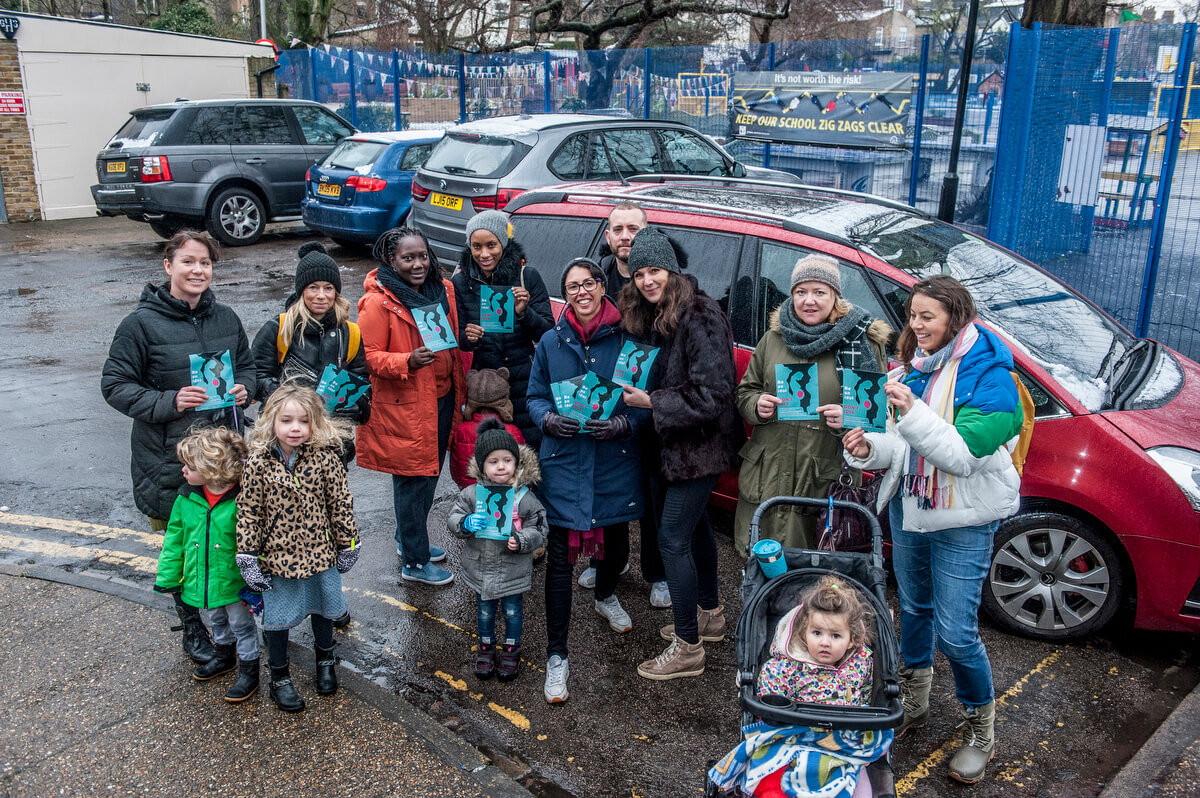
“I salute and admire those mothers who have stepped bravely into what appears to be a leadership and compliance vacuum and who are shaming the powers that be, which they feel strongly are not doing enough to protect their children, to take action.”
I have a School Street! What’s next?

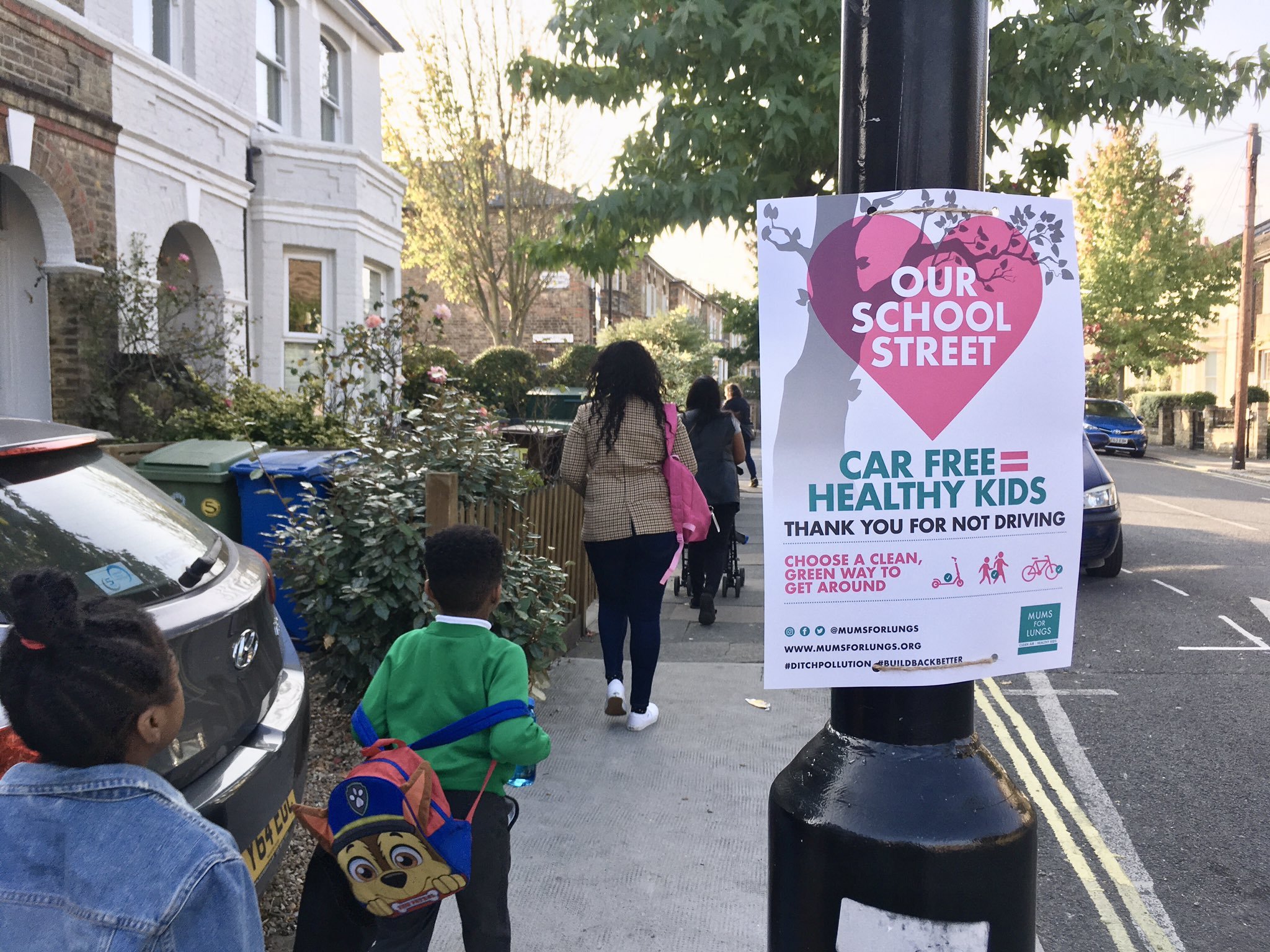
Once you have your School Street, the next step is to celebrate it! We have posters you can put up on your street.
Ask parents, teachers and residents to send feedback to your councillors and cabinet members so that they know whether the scheme is making a difference or has any ongoing implementation issues, and ensure any consultation on implementing the scheme permanently receives support from your school community.
If you’re in London with a new School Street or one that’s about to begin, we have a celebratory School Streets flyer to help you celebrate it or explain the benefits of the scheme to your school community. You can order or download it on our Resources page.
Real School Streets, in their own words
Across the country, schools, parents and councils are working together to make the school run safer and healthier. Here are some of their stories - from the campaigns that got them started to the difference they've made since.
Hammersmith and Fulham, London - Wendell Park Primary School
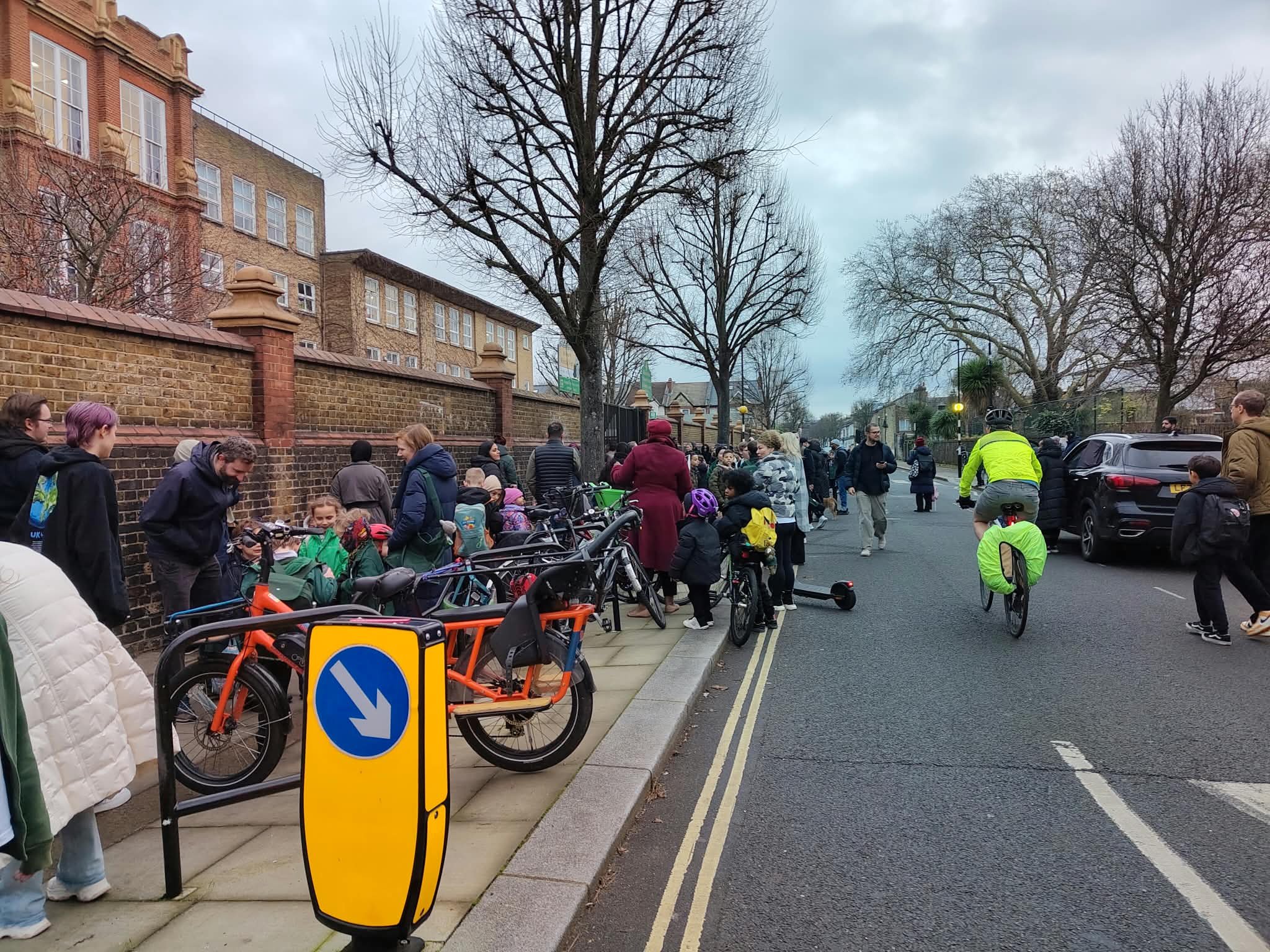
The problem: The street outside Wendell Park Primary used to be a mess at drop-off and pick-up: heavy traffic, illegal parking, conflict between drivers and pedestrians. A group of parents started campaigning for change, motivated by the desire for cleaner air, better health and wanting their kids to be able to get to school independently and safely. They got nowhere for years - until 2022, when they went to the press to highlight the borough's zero-School-Streets record.
What happened: The council responded by introducing a watered-down "Healthy School Streets" scheme, which included pinched-in junctions and planting beds rather than traffic restrictions. Parents kept campaigning and sending letters asking for further action. With support from an ally on the council's climate team, and backing from the school's leadership, a trial was secured for September 2024, with barriers and staff for the first six weeks, and then camera-enforced.
The outcome: The trial became permanent! The street is now calmer and safer at drop-off and pick-up. Parents who live close by that used to drive, now walk their children to school. Some issues remain: unclear communication led to confusion amongst local residents, the after-school pick-up slot isn't covered (parents are now campaigning for an extension), and an ice cream van still idles in the street regularly. However, despite these, as one parent reports, the School Street has made the road “an oasis of calm, clean air and good vibes”.
“Our School Street has changed the atmosphere of the school run completely. The absence of conflict is like a breath of fresh air in the mornings and afternoons. It’s a really pleasant place to be now.”
Tameside, Greater Manchester - Livingstone Primary School
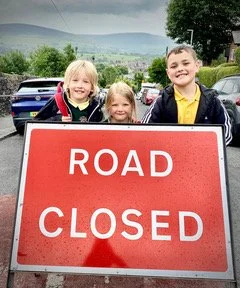
The problem: Parents, carers, and the school were concerned about road safety and the lack of a safe space for children outside the school gates at drop-off and pick-up, and engaged with their local council to find a solution.
What happened: In 2024, Tameside Council offered the school a six-month School Street trial. A working group of staff, parents and carers wrote to families and neighbouring residents to explain the scheme and recruited volunteers to run it. Each day at drop-off and pick-up, volunteers put out traffic cones and a road closure sign, while still allowing through residents, businesses, Blue Badge holders and emergency vehicles. Tameside Council’s traffic wardens and Police Community Support Officers occasionally provide visible support. There have been concerns about displaced parking and traffic, but the school regularly reminds families to park considerately.
The outcome: After a year, the council's planning panel heard from supporters and objectors and voted unanimously to make the scheme permanent. The school has also introduced the WOW walk to school scheme, where children log how they travel to school and earn badges for taking part, and is now regularly one of the top ten in Greater Manchester for active travel. The School Street celebrated its second anniversary in June 2026. Further investment from the council and Transport for Greater Manchester to introduce measures such as ANPR cameras would help to ensure the scheme remains sustainable in the long term without relying so heavily on volunteers and staff.
“We’re delighted that our School Street has been such a success. The road directly outside the school is much quieter, making it safer and healthier for our children, families, carers and staff.”
Ealing, London - Little Ealing Primary School
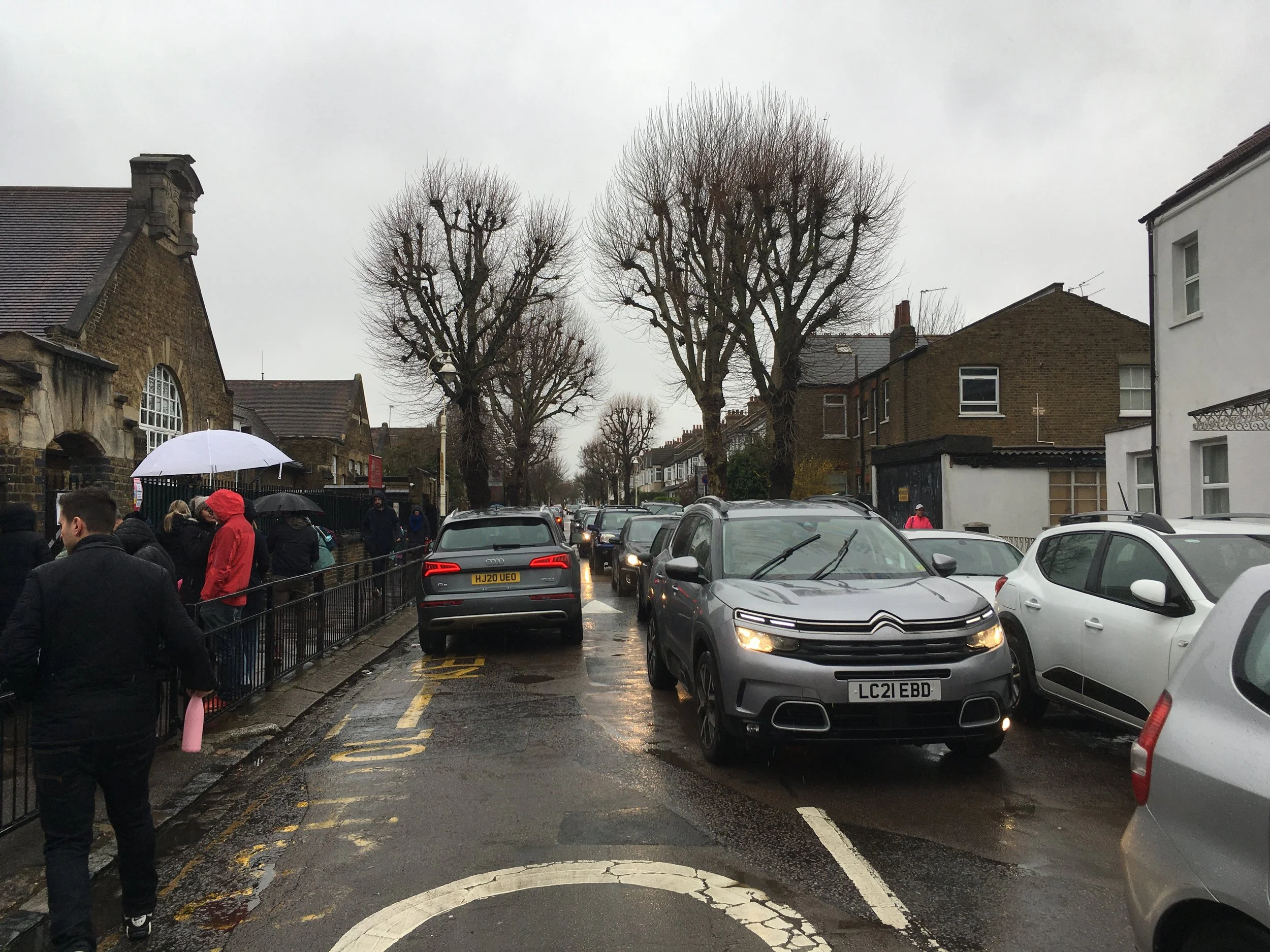
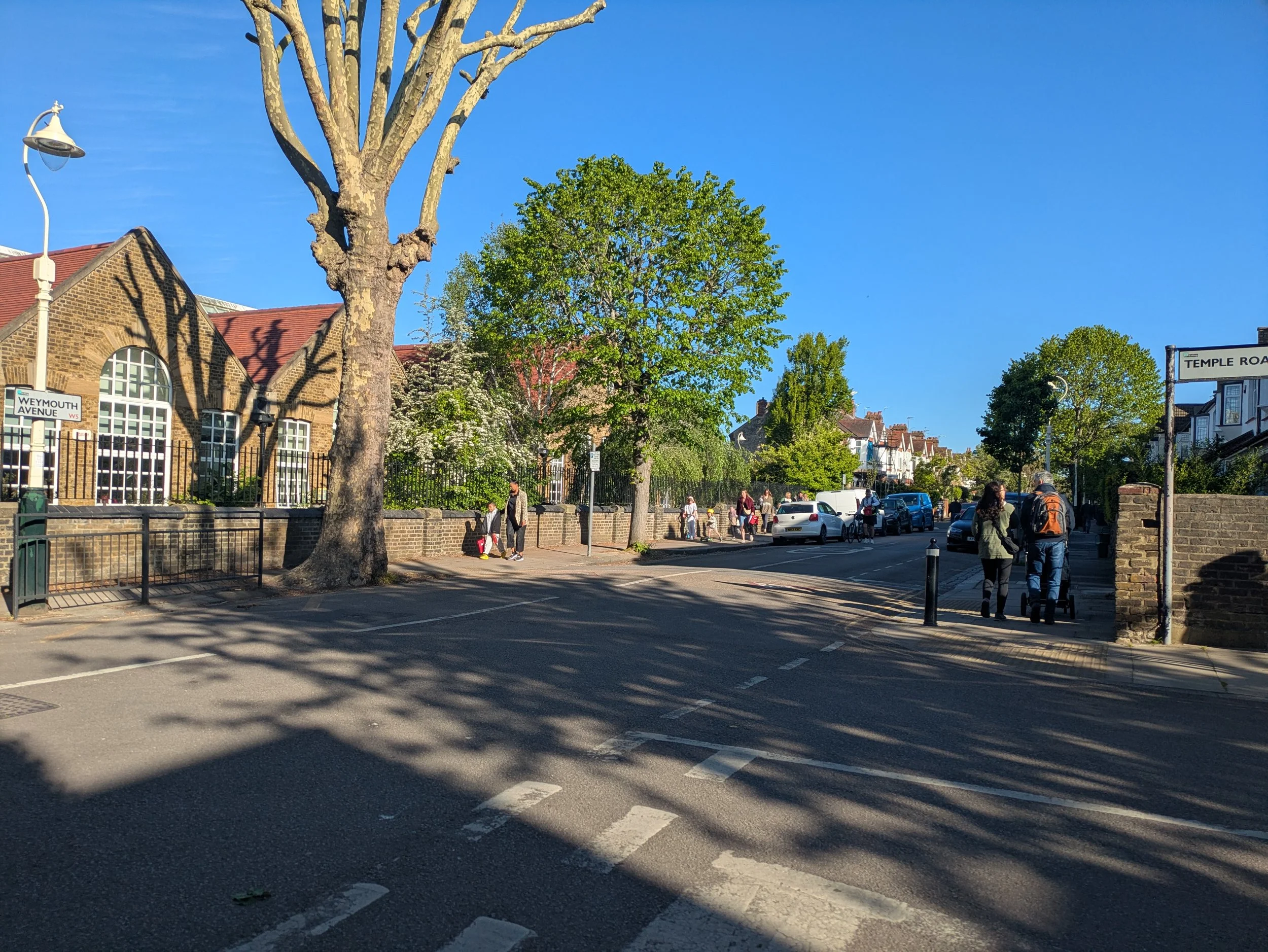
Little Ealing Primary School: Before
The problem: There was a lot of cut-through traffic on the street outside the school, as well as school traffic and idling cars. In 2021, a parent raised the idea of a School Street. Both the school and council were interested, but with limited resources and mismatched expectations about who would do what, the conditions weren't yet right to make it happen.
What happened: Rather than give up, the parent formed a working group through the PTA. In September 2022, the group won funding from climate charity Possible to run a pop-up parklet on Car-Free Day, which proved to be a popular event that helped build support for a School Street in principle. Working with Ealing Transition, the group secured an air quality monitoring node from Breathe London in November 2022, and went on to use the data it gathered to make their case. In 2023, the school joined TfL's Travel for Life programme, held its first play street and ran its first bike bus. In 2024, Ealing Council confirmed the school would be considered for a School Street, though a change in school staff temporarily slowed progress. The group held a second, larger play street that September, funded by a Breathe London Community Partners grant, including a BMX workshop for older children.
The outcome: The School Street finally began in September 2025. Despite some early pushback from a few residents, most parents and residents have welcomed it. Breathe London node data showed a 6 per cent reduction in air pollution in the first six months. Ealing Council went on to become one of the most progressive in London with its School Streets programme, implementing 50 across the borough by July 2026.
“Our family are noticing the all-round improvements to wellbeing that the School Street has been having on our school community. Evidence of the cleaner air is welcome news to me as a parent of an asthmatic child.”
Little Ealing Primary School: After
Any questions?
We’re always happy to have a chat about School Streets on the phone or to present to your school about the scheme.